The feature you're excited about is rarely what sinks a SaaS. It's the surrounding machinery: sign-up, teams and permissions, subscriptions that handle upgrades and failed cards, an admin panel for support, and a marketing site that explains the thing. We build that half properly, then the part you actually pitched.
Every one of these is table stakes. Skip any of them and you find out which one at the worst possible moment.
Sign-up, sign-in, SSO, password resets, invitations, roles and permissions. Multi-tenancy designed in from the start, because bolting it on later means rewriting every query you've written.
Plans, trials, upgrades, downgrades, proration, failed payments, dunning, invoices and tax. The long tail here is where most homegrown billing quietly starts leaking revenue.
Your actual application — dashboards, workflows, data. Built in visible increments so you can put it in front of users before it's finished.
An internal panel to look up an account, refund a charge, extend a trial or debug a customer's state. Without it, every support request becomes a database query written by hand at speed.
The landing pages, pricing page, docs and content programme that bring signups in — the same AI-driven SEO work we do for every other client, pointed at your product's search demand.
Product analytics, error tracking and uptime alerts wired up before launch, so you learn about problems from a dashboard rather than from a cancelled subscription.
Most products should not be built all at once.
| Stage | What you get | What it's for | Typical timeline |
|---|---|---|---|
| Prototype | Clickable core flow, no backend | Testing the idea on real users before spending on engineering | 1–2 weeks |
| MVP | Auth, billing and the single core feature, live | Getting your first paying customers and real feedback | 6–10 weeks |
| V1 | Teams, admin tooling, integrations, marketing site | Growing past the early adopters who forgave the rough edges | 3–5 months |
| Scale | Performance, reliability, SSO, compliance | Selling to larger customers with procurement teams | Ongoing |
Who it's for, what it replaces, what one thing it must do well. We push hard to cut scope here — the shortest path to a paying customer beats the most complete feature list.
A clickable core flow in front of real users before production code exists. This is the cheapest possible moment to discover you're building the wrong thing.
Auth, billing and the core feature, shipped to a staging environment you use daily. AI accelerates the routine engineering; architecture and code review stay human.
Real customers, real analytics, and a roadmap driven by what they do rather than what we guessed. Ongoing development or full handover — your call.
Sites for software companies, and the subscription products we built and ran ourselves.
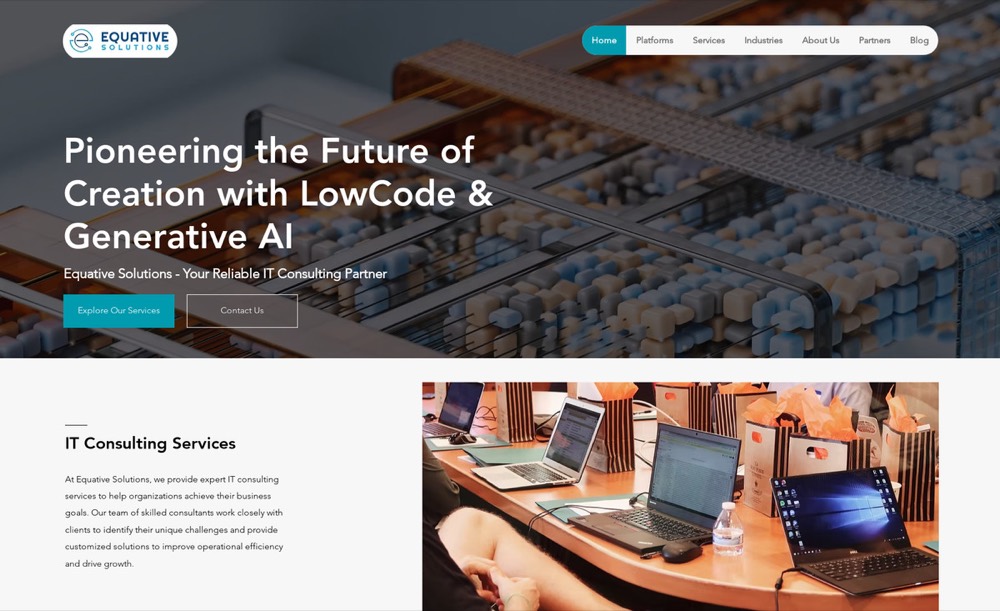
IT consultancy selling low-code and generative-AI delivery. Platforms, services and industries split so each buyer finds their own entry point.
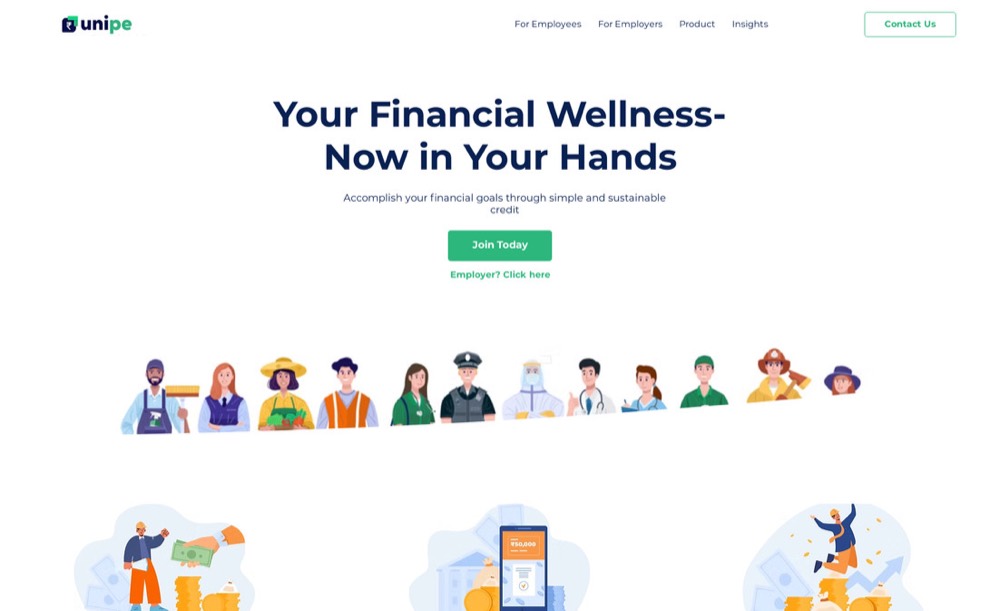
Marketing site for a B2B earned-wage-access product, split into two journeys — employees and employers — without doubling the build.
A US wine marketplace driven by sommeliers. Product design and development, feature ideation, and the pivot that reshaped the core idea.
5,000+ orders · 20+ events · 2 web apps + adminFast, yes — AI has genuinely compressed the routine engineering, and a focused MVP is weeks rather than quarters. Cheap is relative: auth and billing alone are real work whatever the marketing says. The way to control cost is ruthless scope-cutting at the start, which we'll push you toward harder than you might expect.
No. We're a build partner, not a co-founder, and equity-for-services arrangements tend to end badly for both sides once priorities diverge. Fixed price against a written scope keeps the relationship clean.
Boring, well-supported technology that any competent developer can pick up — that matters more than novelty when you're hiring your first engineer in a year. We'll propose specifics after discovery and explain the trade-offs rather than handing you a stack to take on faith.
We build to sensible practice by default: encryption in transit and at rest, sane data retention, audit logging, access control. Formal certification is a process involving auditors and your own policies, not something a development agency can hand you. We'll build what the auditors will ask for and tell you plainly where our part ends.
Send us access. We'll assess the codebase and tell you honestly whether to continue it, refactor it, or restart. Inherited projects are common and often salvageable — but we won't pretend a rewrite is a rescue, or the reverse.
A paragraph is enough to start. We'll come back with the smallest version worth building, roughly what it takes, and what we'd cut from your first release.
Start the conversation